Stop Managing Time. Start Managing Priorities.
How often have you thought that you or your leaders need time management training?
It’s a reasonable thought. Leaders are busy. The pace is relentless. Calendars and inboxes are always full. But here’s the reality most organisations eventually discover:
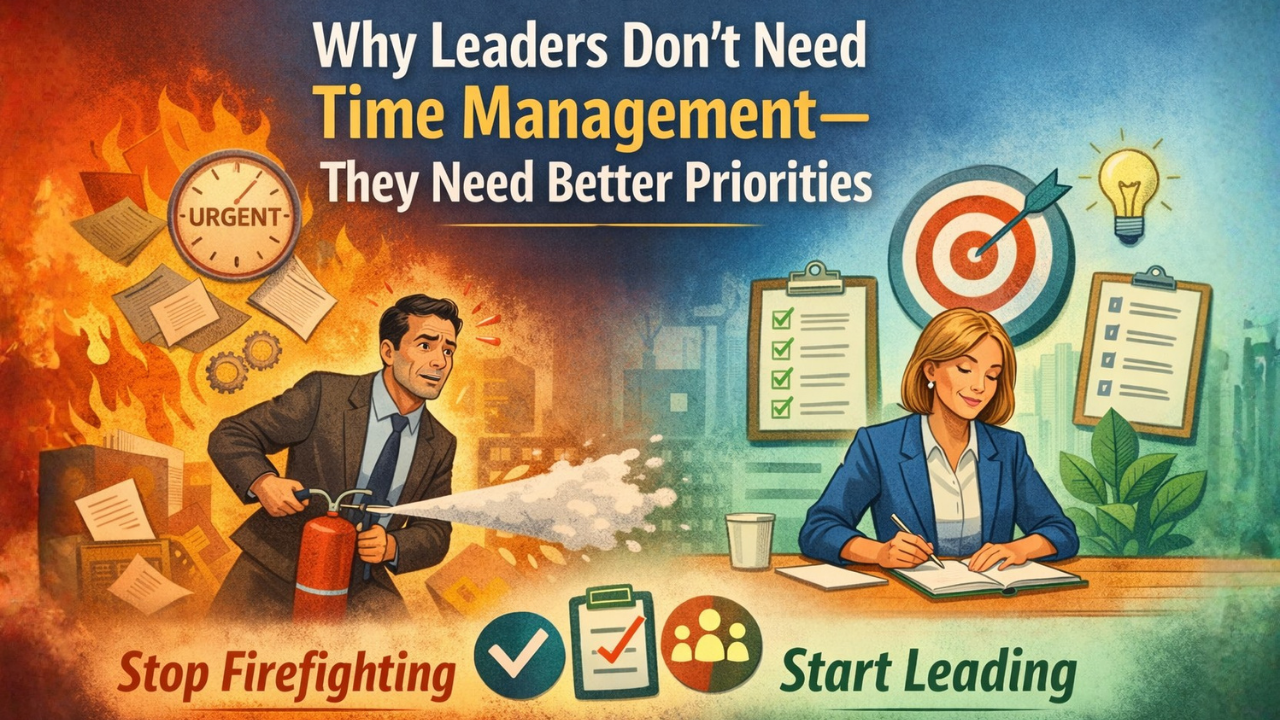
Most leaders don’t have a time management problem. They have a priority management problem.
And that problem is eroding leadership effectiveness, team performance, and culture.
Time Management Training Misses the Point
Modern leaders are surrounded by brilliant time management tools which are always improving. Digital calendars that automatically import appointments, project platforms, reminders synced across devices, we’ve never been better equipped to manage time.
Yet it’s not working. Leaders still feel overwhelmed. Why?
Because time management tools only work after priorities are clear.And for many leaders, priorities are constantly hijacked by urgent issues. This is why “time management training” fails to create lasting change. It teaches people how to use calendars without addressing the leadership decisions that determine what deserves time in the first place.
The Firefighting Trap
Firefighting feels great. It feels like you are being productive. Urgent issues demand attention. Problems escalate. Leaders step in, solve the issue, and feel useful. It feeds the ego and reinforces the idea that “nothing works unless I’m involved.”
But firefighting is not good leadership. It creates:
- Dependency on the leader
- Repeated, instead of solved, problems
- Teams that wait instead of taking proactive action
- Leaders who are busy but ineffective
Over time, leaders become trapped in operational noise and lose the space required to lead proactively.
Urgent vs Important
Urgent work is time-based. Important work is impact-based. Most of the work that actually improves performance is important but not urgent, which is why it gets postponed. This includes:
- Coaching and developing people
- Clarifying roles and decision-making authority
- Aligning teams to shared goals
- Reviewing performance and learning from mistakes
- Addressing tensions early
- Building accountability and trust
Have you ever thought, “We don’t have time to review.” That statement is a red flag.
If leaders don’t have time to review, they don’t have time to improve, and without improvement, everything becomes harder, slower, and more reactive.
Priority Management Is an Essential Leadership Capability
Organisations expect leaders to “just manage it better” without:
- Changing expectations
- Building the capability to prioritise effectively
- Establishing a proactive approach that stops leaders from being dragged back into firefighting
Priority management isn’t about personal discipline alone. It’s about leadership capability, structure, and support. This is exactly why we see two approaches work consistently.
Our Fast Track workshops are designed for leaders who need practical shifts, not theory.
Instead of teaching generic time management tools, Fast Track Proactive Planning focuses on:
- Planning essential activities
- Understanding the difference between urgent and important work
- Identifying the people and leadership priorities that prevent future problems
- Building routines that protect time for coaching, reviewing, and planning
- Shifting leaders from reactive to proactive thinking
It’s a fast way to give leaders the insight and tools they need to stop firefighting and start leading.
But capability alone isn’t always enough.
The Co-Captain: Protecting Leadership Priorities Long-Term
Even capable leaders get pulled back into urgency when pressure increases. That’s why the Co-Captain model exists. A Co-Captain works alongside senior leaders as a trusted leadership partner, focused purely on the people and leadership priorities that are so often sacrificed.
They help leaders:
- Stay focused on essential leadership activities and what matters most
- Coach and develop leaders at all levels
- Address issues early before they escalate
- Maintain alignment, clarity, and accountability
- Protect time for leadership work that never feels urgent, but always matters
The Co-Captain doesn’t replace the leader. They enable the leader to lead.
The Leadership Payoff
When leaders stop managing time and start managing priorities, organisations see:
- Fewer recurring issues
- Stronger accountability
- More capable teams
- Less dependency on senior leaders
- Better decisions and better outcomes
Most importantly, leadership stops being a bottleneck. Instead of asking:
“How do I fit more into my week?”
Ask:
“What are the leadership priorities only I can do — and what support do I need to protect them?”
Because great leadership isn’t about reacting faster. It’s about creating the conditions where fewer fires start in the first place.
 Or call Ross directly on 0412 490 250
Call Team Focus Plus on 1300 551 274 or Email team@teamfocusplus.com
Stay Connected
Sign up for our newsletter to get updates on upcoming workshops and transformational leadership programs.