Are you tired of constantly “holding people to account”?
If it feels like you’re pushing, chasing, reminding, and repeating yourself you’re not alone. Accountability is one of the most talked-about leadership challenges, yet one of the least understood.
The truth is simple: you can’t build accountability by enforcing it.
You build accountability by building personal responsibility.
Welcome to Fast Track to Accountability a practical leadership approach designed to shift mindsets, strengthen ownership, and create a culture where people naturally follow through.
Why Holding People to Account Isn’t Enough
Most leadership advice focuses on the moment after something goes wrong:
“Have the tough conversation. Hold them to account.”
But that assumes the person is already willing to take responsibility.
If their mindset is defensive, blaming others, making excuses, deflecting responsibility, then pushing harder only creates friction. You can’t demand accountability from someone whose mindset is anchored in avoidance.
A different approach is needed.
Step One: Build Personal Responsibility
You will never create a culture of accountability if your people are stuck in the blame game.
Accountability starts with a mindset shift from:
Excuses → Ownership
Problems → Possibilities
Deflection → Responsibility
Here are the conversations that make the difference:
“What can you do about it?”
“How did you influence this outcome?”
“What will you commit to next time?”
These future-focused questions redirect attention away from justifying the past and toward taking control of the future, the foundation of an accountable culture.
Step Two: Use the Constructive Ladder
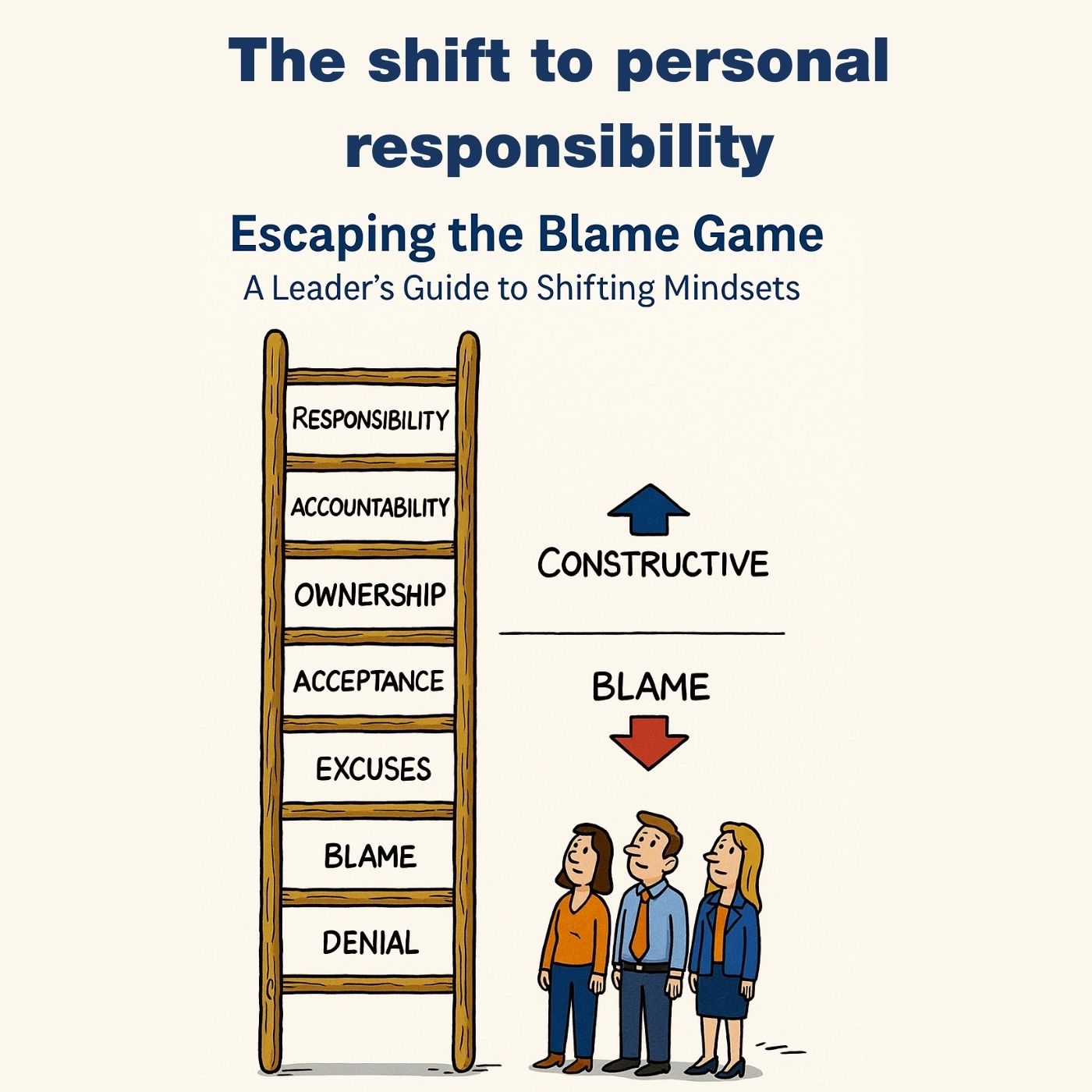
To help leaders guide people out of blame and into ownership, the Team Focus Plus Constructive Ladder is a simple yet powerful tool.
Just ask:
“Where are you on the ladder right now, and what could you do differently to deliver on your commitment?”
This short conversation helps people:
Recognise unproductive mindsets
Shift into constructive thinking
See new choices
Step into responsibility
When used consistently and gently, it rewires how people think about their role, their impact, and their obligations.
Step Three: Build Commitment Before Accountability
Once people are thinking constructively, you can move to the next critical step: agreement and commitment.
Invite them to define:
What’s possible
What they will deliver
What success looks like
When they articulate their own commitments, follow-through increases dramatically. And now, holding them to account becomes incredibly easy because you’re simply checking progress against their own commitments.
This flips accountability from pushing → partnering.
Fast-Tracking Accountability in Your Business
A culture of accountability doesn’t come from tough conversations, it comes from consistent conversations.
Here’s the simple formula:
Build personal responsibility
Shift mindset from blame to constructive thinking
Use the Constructive Ladder to expand awareness
Get people to agree and commit to what’s possible
Follow up and reinforce progress
Leaders who master this process see people step up, take initiative, and deliver with far less supervision. That’s what fast-tracking accountability looks like.
Want to Go Deeper?
Team Focus Plus offers practical, proven tools that build responsible, committed, high-performing teams.
📞 Or call Ross directly on 0412 490 250
📞 Call Team Focus Plus on 1300 551 274 or
📧 Email team@teamfocusplus.com
Stay Connected
Sign up for our newsletter to get updates on upcoming workshops and transformational leadership programs.