Leaders often ask:
“How do I know if my feedback has been taken well?”
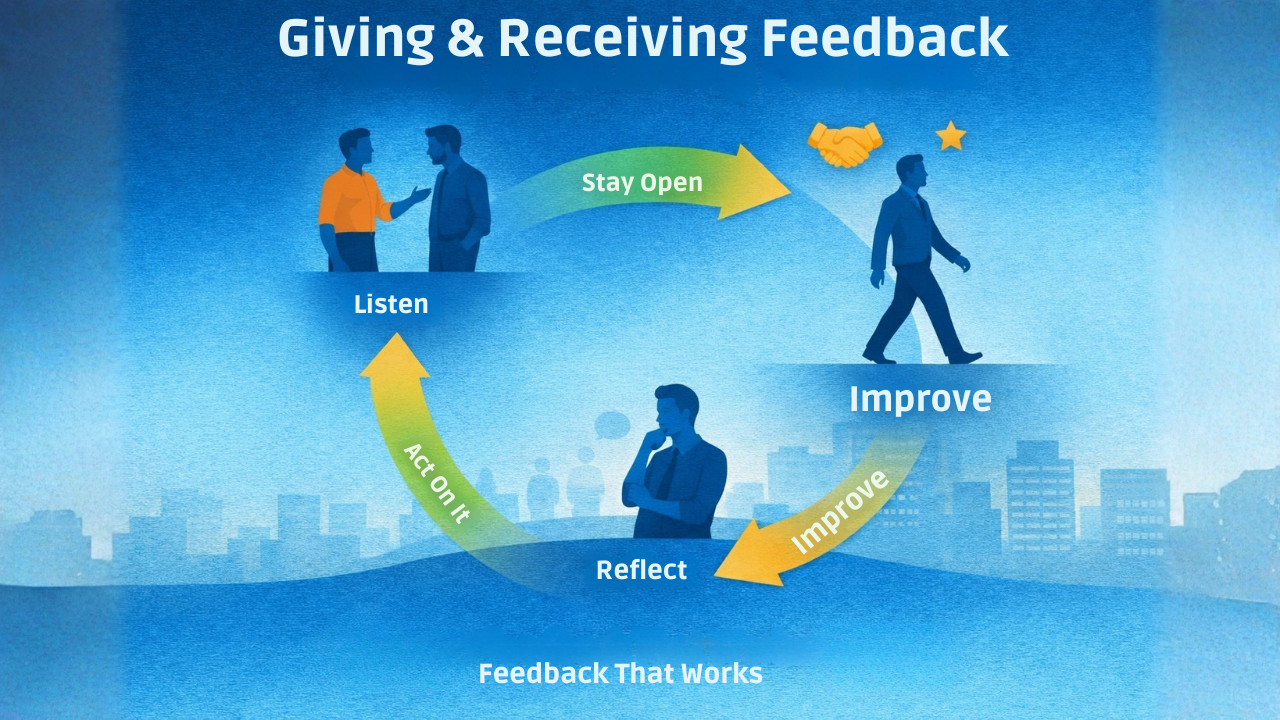
The answer is simpler than most people expect. You know by what happens next. When feedback lands well:
- People stay open and engaged
- They don’t get defensive
- They reflect on what you’ve said
- They thank you
- And most importantly — their behaviour changes
If none of that happens, the feedback hasn’t worked, no matter how carefully it was delivered. The problem isn’t feedback itself. It’s how leaders think about it — and how they deliver it.
The Biggest Myth About Feedback
Many leaders believe feedback sits on a spectrum:
- Positive feedback should be encouraging and light
- Constructive feedback should be careful, heavy, or softened
That distinction causes more damage than almost anything else.
Here’s the truth:
Positive and constructive feedback follow the same rules.
Both need to be:
- Timely
- Specific
- Focused on behaviour and outcomes — not the person
When leaders treat them differently, feedback becomes inconsistent, confusing, and easy to dismiss.
3 Mistakes Leaders Make With Feedback
Treating Positive and Constructive Feedback as Different
Leaders often rush positive feedback and overthink constructive feedback.
“Good job”
“Well done”
Those comments feel nice — but they achieve nothing. If you don’t explain what worked and why, people can’t repeat it. And if constructive feedback is overly cautious or vague, people don’t know what to change. Clarity matters more than tone.
Generalising Instead of Being Specific
General feedback feels safe — but it’s useless.
- “You handled that well.”
- “That could have been better.”
Handled what well?
Better how?
Specific feedback tells people exactly:
- What behaviour mattered
- What outcome it created
- What to repeat or adjust next time
Without examples, feedback becomes opinion. With examples, it becomes a learning tool.
Waiting Too Long or Making It Personal
Delayed feedback loses impact. By the time it’s delivered:
- The moment has passed
- The detail is lost
- Emotions have built up
And when feedback targets the person instead of the behaviour:
- Defensiveness is guaranteed
- Learning shuts down
- The relationship takes a hit
Strong feedback is about results and behaviour, not personality or intent.
How You Know Feedback Has Been Taken Well
This is the real test. When feedback works, you’ll notice:
- Openness instead of defensiveness
- Curiosity instead of justification
- Reflection instead of resistance
- Action instead of avoidance
People may not agree with every word — but they stay engaged.
Often they’ll say things like:
- “That’s helpful.”
- “I hadn’t thought about it that way.”
- “I’ll try that next time.”
And then — they do. That’s how you know feedback has landed.
Feedback Isn’t Soft or Hard — It’s Clear
Many leaders worry about being:
- Too soft
- Too blunt
- Too confrontational
- Too nice
Those are the wrong concerns.
Great feedback isn’t soft or hard. It’s clear, timely, and focused on outcomes.
When feedback is delivered that way:
- People don’t get defensive
- Conversations build trust instead of tension
- Performance improves naturally
That’s when feedback actually works.
A Simple Reframe for Leaders
Before giving feedback, ask yourself:
- Is it timely?
- Is it specific?
- Is it about behaviour and outcomes — not the person?
If the answer is yes, you’re on the right track. Because feedback isn’t about fixing people.
It’s about helping them succeed.
You know feedback has been taken well when people stay open, reflect on it, and act on it.
If feedback regularly creates defensiveness, confusion, or inaction, the issue isn’t the people. It’s the feedback.
When leaders deliver feedback that is timely, specific, and focused on outcomes, it stops being awkward — and starts being one of the most powerful tools they have.
 Or call Ross directly on 0412 490 250
Call Team Focus Plus on 1300 551 274 or Email team@teamfocusplus.com
Stay Connected
Sign up for our newsletter to get updates on upcoming workshops and transformational leadership programs.