
The Real Way to Build Trust in a Team (Hint: It’s Not What You Think)
If you’ve ever been part of a team where everything just works—clear communication, effortless collaboration, mutual respect—you’ve experienced something powerful. That magic often comes down to one word: trust.
When asked what makes a team effective, the most common answer we hear in leadership workshops across Australia is trust. Yet surprisingly, most organisations and leaders go about building trust in teams the wrong way.
The Trust-Building Trap
Think about the typical “trust-building” session—maybe some icebreakers, a group circle, or even a team-bonding activity. But often, these experiences feel forced. Rather than strengthening relationships, they can make people feel uncomfortable or even more guarded.
Why? Because when you try to build trust for the sake of it, it often backfires. Trust can’t be fabricated—it must be earned through how you lead and how your team operates.
Want Trust at Work? Focus on What Breaks It
True organisational trust building doesn’t start with trust exercises. It starts with addressing the everyday friction that damages trust quietly but consistently.
After three decades helping leaders improve trust at work in Australia, I’ve found three consistent trust-killers:
1. Misaligned Objectives
If your team isn’t pulling in the same direction, suspicion creeps in. People question each other’s motives, protect their turf, and hold back ideas.
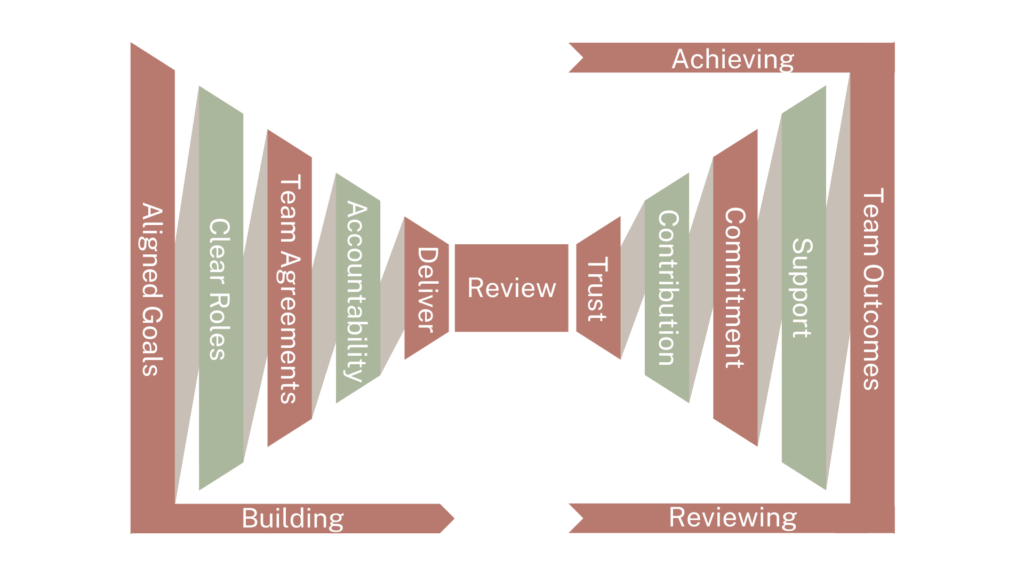
✅ Solution: Get everyone on the same page. Create a shared vision that every team member understands, believes in, and can actively contribute to. Building trust in teams begins with shared purpose.
2. Confused Roles and Responsibilities
Ambiguity breeds tension. When it’s unclear who’s doing what—or worse, when boundaries are crossed—frustration rises and trust erodes.
✅ Solution: Be explicit. Clarify roles, responsibilities, and decision rights. This simple step is a game-changer in team trust-building strategies.
3. Unclear Team Norms
From communication styles to decision-making processes, mismatched expectations cause unnecessary conflict.
✅ Solution: Design your team dynamics. Agree on how your team communicates, gives feedback, resolves issues, and meets. This is how you shape a culture of trust—by agreeing on how you’ll work together.
Leadership and Trust Go Hand in Hand
If you’re a leader, trust doesn’t come from being liked—it comes from being consistent. It comes from clarity, follow-through, and fairness. Strong leadership and trust are built when your team knows what to expect and that you’ll deliver.
When leaders design the right environment—shared goals, clear roles, and aligned behaviours—trust at work becomes a natural outcome.
You Don’t Build Trust—You Design for It
Trust isn’t a one-off event or workshop. It’s the result of deliberate design and leadership. A team that knows its purpose, has clarity on its structure, and operates by shared agreements will build trust organically.
That’s the foundation of a high-performance culture. And it’s completely achievable.
Want to See What Organisational Trust Building Looks Like?
Check out our Team Development Model—a practical framework for leaders who want to create sustainable trust and team alignment.
📩 Want to talk through how to apply it to your team? We’re here to help. Book a time that suits you to chat.
📞 1300 551 274
📧 team@teamfocusplus.com
Let’s build the trust your team needs to thrive.